

How AI is Changing the Future of Data Center Construction


.png)
AI has moved from buzzword to building principle, reshaping how facilities are imagined, financed, and delivered. Owners want efficiency, resilience, and measurable performance, and the best teams are using AI to deliver all three without compromise.
From siting to structural systems, electrical design to commissioning, AI-guided workflows are elevating standards across data center development. The result is smarter sites, smarter layouts, and smarter operations. The same discipline applies to homes and mixed-use properties. A seasoned AI data center builder approaches estates, ADUs, and subdivisions with the rigor used on mission-critical projects.
As investors weigh long-term value, proven playbooks from data center construction help reduce risk, lower OPEX, and deliver comfort with control. For West Coast landowners, the convergence of policy, climate, and talent makes this a rare moment to build for the next decade rather than the last.
Why AI Is Reshaping Modern Data Center Development
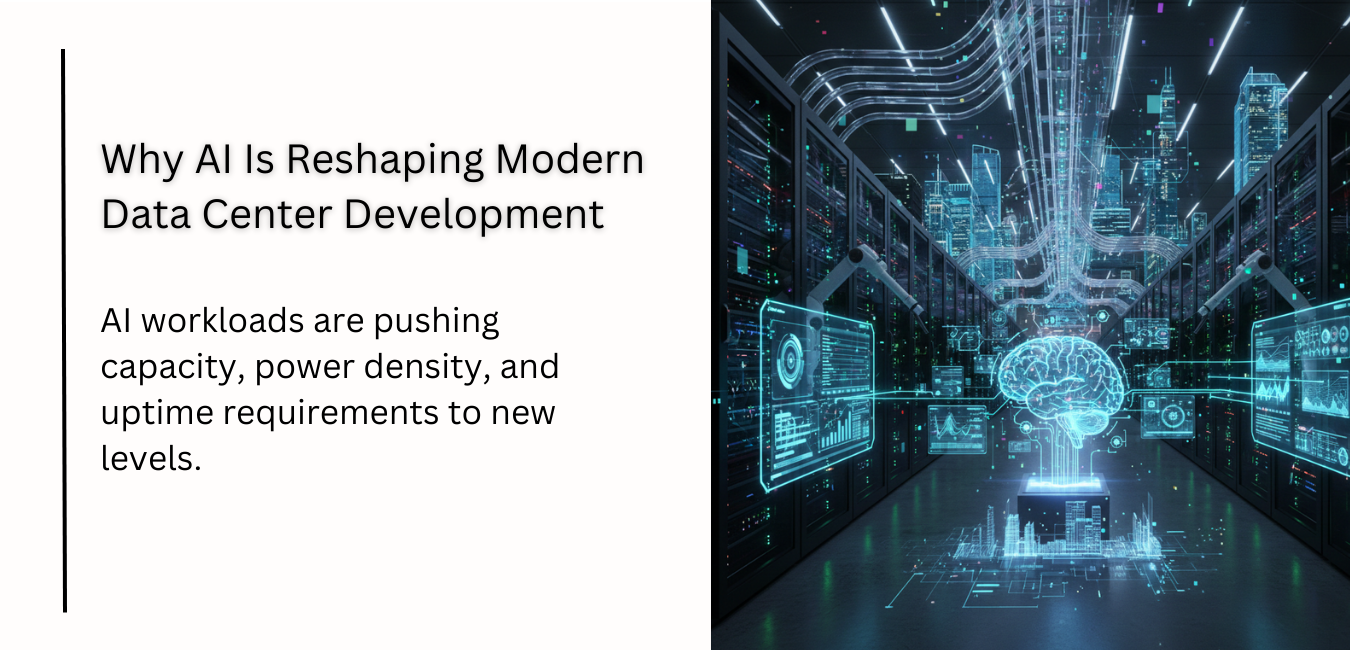
AI workloads are pushing capacity, power density, and uptime requirements to new levels. This shift is setting a faster, smarter standard for advancing data center construction that rewards teams able to move from concept to commissioning with precision.
From Static Buildings to Intelligent Ecosystems
Data centers are evolving into responsive environments that adapt to live conditions. AI-driven control loops redistribute workloads, tune cooling, and rebalance power to cut waste and sustain performance.
This continuous optimization is changing expectations for mission-critical projects, where uptime and efficiency must rise together. Homeowners can apply the same logic to "smart estates," building properties that learn usage patterns, save energy, and simplify operations.
The West Coast Advantage
California and Washington sit near the largest AI and cloud platforms, shortening supply chains and attracting capital for data center construction.
Abundant renewables and cooler climates support sustainable scale while meeting strict codes. This combination favors owners who work with an experienced AI data center builder capable of delivering complex, high-value assets.
AI-Driven Design & Planning for High-Density AI Loads
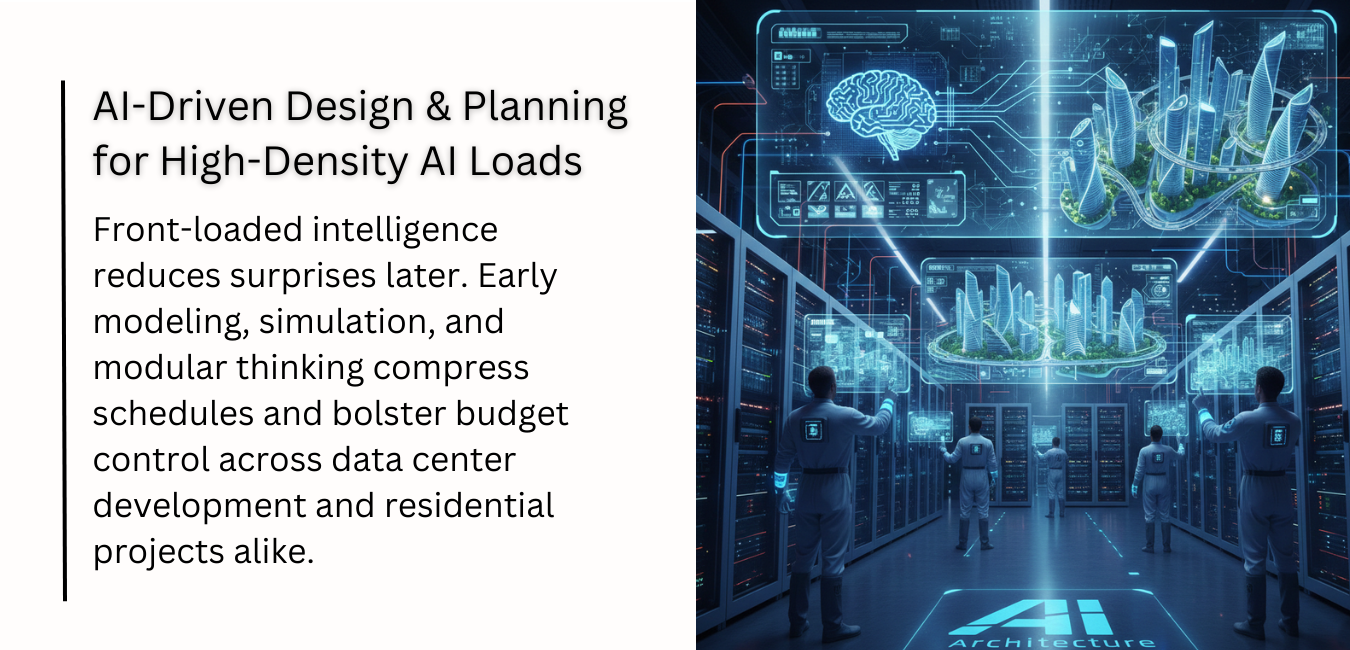
Front-loaded intelligence reduces surprises later. Early modeling, simulation, and modular thinking compress schedules and bolster budget control across data center development and residential projects alike.
Generative AI & Simulation for Smarter Designs
Generative tools test thousands of configurations to refine rack layouts, airflow, power paths, and structural systems.
Teams validate options virtually before buying materials, speeding decisions and cutting rework on mission-critical projects. The same methods translate to homes, where optimized floor plans and MEP routing unlock comfort, capacity, and lower lifetime costs.
AI-Enhanced Site Selection
Modern site studies use AI to parse utilities, zoning, hazards, climate, and incentives at scale. This approach narrows choices quickly, improving confidence and timelines for advancing data center construction. For residential subdivisions and compounds, it informs grading, access, energy strategies, and long-term operating profiles.
Modular, Scalable Construction Strategies
Phased deployment lets owners build what adds value now and expand cleanly later. AI helps right-size modules, plan interconnects, and sequence trades to support growth without disruption in data center construction. The same strategy benefits estates and multi-ADU projects, where you can stage utilities and systems for future additions.
Faster, Smarter Permitting & Compliance
AI-enabled code checks flag clashes, accessibility gaps, and wildfire or coastal constraints during design.
Digital submissions and structured models speed reviews for mission-critical projects, reducing back-and-forth. For homeowners in sensitive zones, early risk visibility reduces redesigns and keeps momentum.
Transforming Construction & Operations With Automation
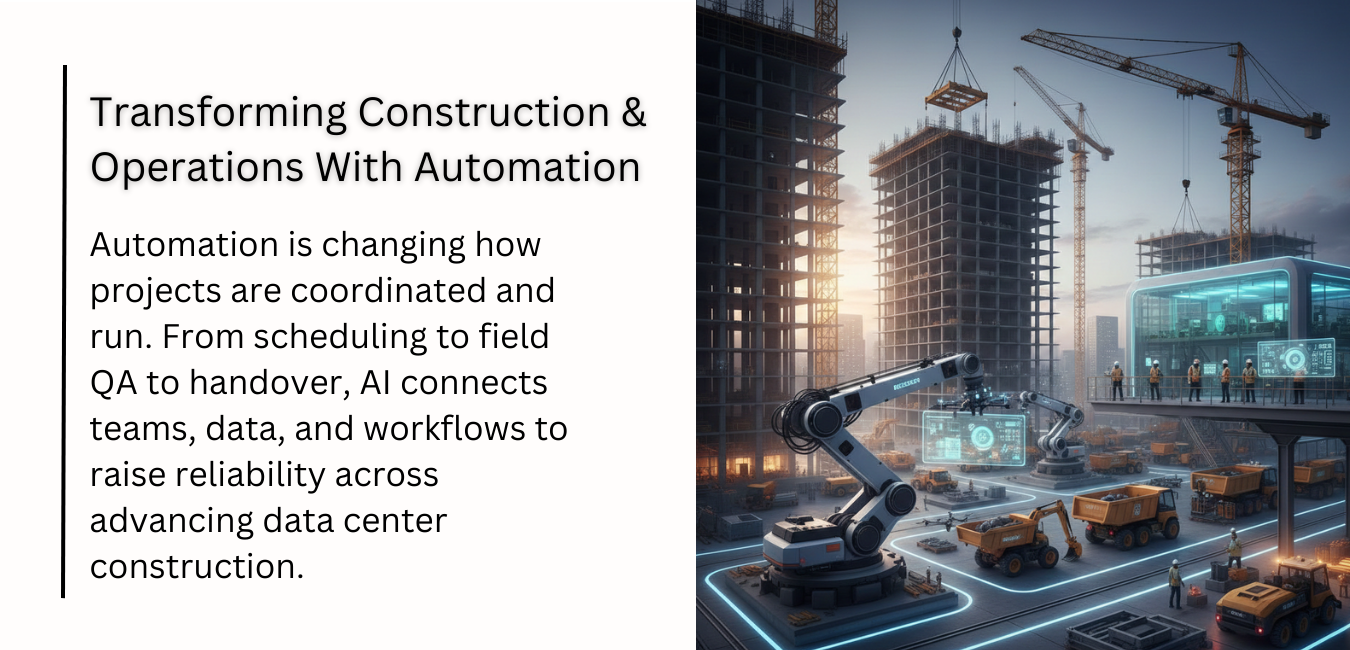
Automation is changing how projects are coordinated and run. From scheduling to field QA to handover, AI connects teams, data, and workflows to raise reliability across advancing data center construction.
AI-Driven Project Management
Predictive analytics highlight schedule pressure, supply constraints, and labor mismatches before they hit the site.
Live dashboards track milestones, RFIs, QA photos, and variances, raising transparency for clients. These practices, common in data center development, bring service-level clarity to custom homes as well.
Predictive Maintenance From Day One
Sensor data and ML models forecast component health across generators, switchgear, pumps, and CRACs. Planning maintenance windows reduces downtime and protects warranties on mission-critical projects. Homes benefit too, with predictive insights for HVAC, solar, batteries, pools, and gates that simplify ownership.
Automation & Infrastructure as Code (IaC)
Software-defined infrastructure treats configuration as versioned code, reducing human error. AI assists with provisioning, compliance checks, and rollback strategies in data center construction. The same mindset yields dependable home automation that coordinates lighting, security, AV, and energy systems.
Power, Cooling & Sustainability in the Age of AI
Power and thermal strategies define feasibility and operating cost. AI orchestration plus new cooling technologies are rewriting best practices for data center development and for private properties with high energy demands.
Advanced Cooling & Liquid Cooling Layouts
High-density AI silicon pushes facilities toward direct-to-chip liquid cooling and rear-door heat exchangers.
These systems change piping, manifolds, leak detection, and structural loading patterns on mission-critical projects. Large homes gain from the same thermal rigor, especially in server rooms, theaters, and media labs.
Real-Time Energy Optimization
AI coordinates loads, storage, and cooling in real time to lower peak demand and utility spend. Model predictive control cuts waste while maintaining thermal envelopes in advancing data center construction. Estates can apply similar strategies across EV fleets, spas, pools, and workshop equipment.
Deep Sustainability & Renewable Integration
Integrated planning aligns solar, wind, batteries, and grid power to balance cost and resilience. AI forecasts weather, tariffs, and usage to pick optimal charge and discharge windows for data center development. Owners aiming for net-zero can blend on-site generation with smart controls to hit carbon and comfort goals.
Security, Resilience & the Future of Talent

Reliability spans digital and physical domains. Next-generation facilities rely on integrated security, automation fluency, and cross-trained teams who can deliver mission-critical projects without drama.
AI-Enhanced Security & Resilience
Anomaly detection across networks, access control, cameras, and sensors catches threats early. Digital twins test failover, fire events, and power transitions to validate contingency plans in data center construction. Residential estates benefit from unified platforms that link gates, cameras, lighting, and emergency response.
New Skill Sets for Modern Builders
Builders need software-literate teams versed in automation, APIs, and IaC. Coordinating architecture, MEP, and controls is now core to advancing data center construction. That expertise transfers to complex residential work where design meets technology at every turn.
What This Means for High-End Homeowners & Landowners
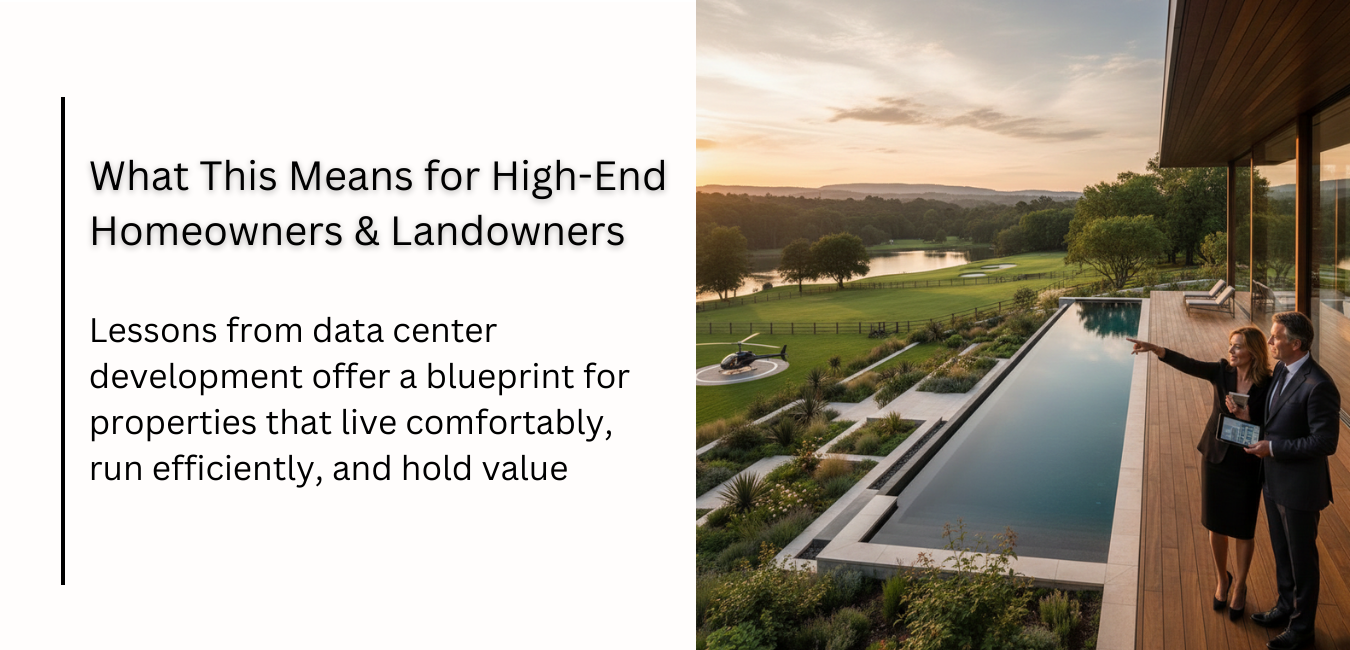
Lessons from data center development offer a blueprint for properties that live comfortably, run efficiently, and hold value. Applying these tools yields clarity before you spend and confidence once you move in.
Smarter Decisions for Land & Capital
AI-backed feasibility studies test ADUs, subdivisions, or compound layouts against constraints and costs.
Owners see clear utility needs, access plans, and lifecycle expenses common to mission-critical projects. Better inputs lead to better pro formas, clearer scopes, and fewer surprises.
Future-Ready, Efficient Living Spaces
Self-healing systems adjust comfort and energy automatically, informed by real usage. Materials and assemblies are chosen for performance and serviceability as practiced in data center construction. The result is a property built for evolving technology and long-term ownership.
Choosing the Right Partner for AI-Enhanced Projects
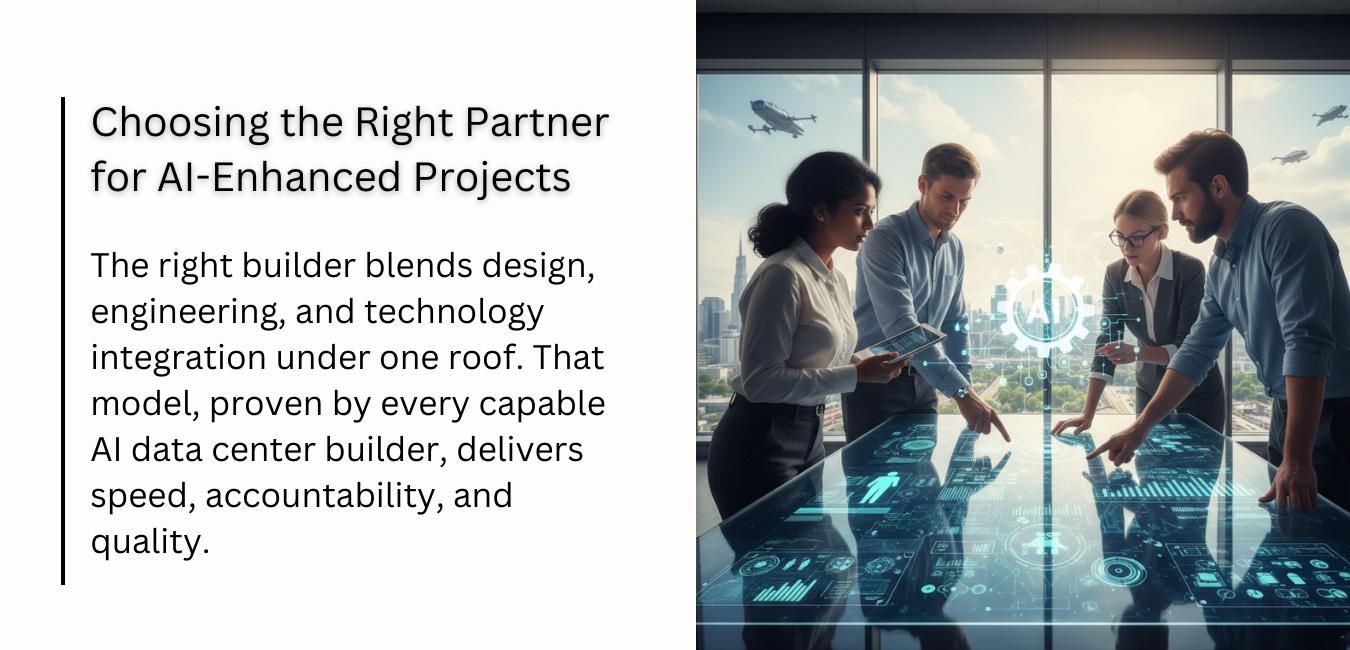
The right builder blends design, engineering, and technology integration under one roof. That model, proven by every capable AI data center builder, delivers speed, accountability, and quality.
Questions to Ask an AI-Savvy Builder
- How do you employ AI for design, scheduling, budgeting, and risk management on mission-critical projects?
- What experience do you have with high-density power, complex MEP, and integrated controls typical of advancing data center construction?
- Which dashboards and reporting give owners real-time clarity from precon to closeout?
The Value of a Full-Service, Tech-Forward Approach
Unified teams coordinate drawings, permits, procurement, and commissioning with fewer handoffs. This mirrors the integration required for data center development, where small delays cascade. For busy owners, one accountable partner simplifies decisions and keeps outcomes aligned with goals.
How Element Homes is Bringing AI-Inspired Innovation Into Residential & Infrastructure Projects
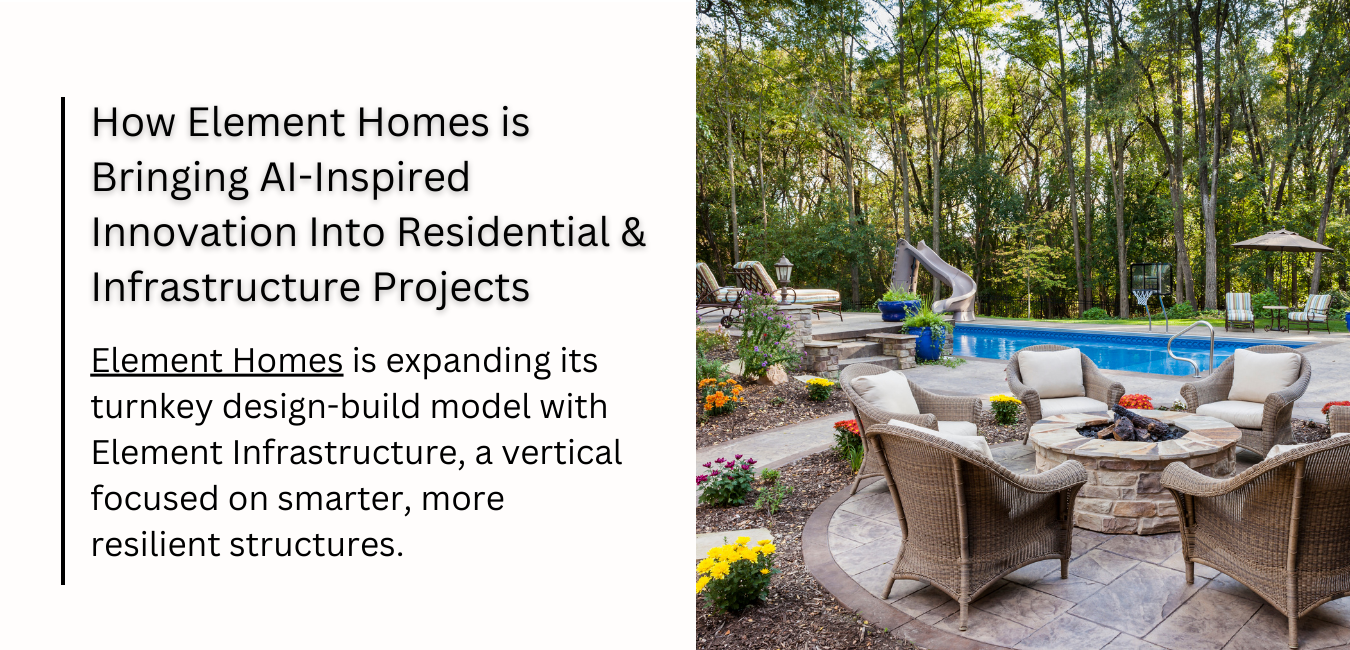
Element Homes is expanding its turnkey design-build model with Element Infrastructure, a vertical focused on smarter, more resilient structures. The approach draws on practices proven in data center construction and adapts them for residential and civic needs.
Our Full-Service Approach to Future-Ready Building
One contract covers architecture, permitting, engineering, construction, and technology integration. Standardized processes add clarity and control across scopes typical of mission-critical projects. From concept to closeout, owners get a single source of truth and a steady cadence of decisions.
Creating Smarter, More Resilient Living Environments
We apply AI-informed design, predictive maintenance, and intelligent energy management to homes and communities.
These methods, aligned with advancing data center construction, produce spaces that adapt gracefully. Whether building estates, ADUs, or subdivisions, the focus stays on efficiency, comfort, and security.
Conclusion
AI is transforming facilities into intelligent ecosystems that plan, simulate, and operate with uncommon precision. Methods born in data center development are now guiding residential and mixed-use projects that prize comfort, uptime, and cost control.
Owners who partner with an experienced AI data center builder gain the playbooks used on mission-critical projects, from siting and modeling to automation and commissioning. The result is a property that performs from the first day and keeps improving with time.
Partner with Element Homes to bring the discipline of advancing data center construction to your next build. Start a conversation today and explore how our design-build team delivers clarity, speed, and lasting value in data center construction and beyond.

Related POsts
Longevity Home Design: Key Features for a Healthier Luxury Custom Home
Explore longevity home design ideas for a healthier luxury custom home, from cleaner air and better lighting to wellness spaces and durable materials.
Read moreBuilding a Luxury Custom Home in Atherton: Costs, Permits, Timelines & Design
Planning a luxury custom home in Atherton? Learn about costs, permits, timelines, tree rules, design choices, and what to review before construction.
Read more