

Top Trends in Modular Data Center Design and Construction for 2026


.png)
Modular data centers are moving from niche experiments to the default model for digital infrastructure. The year 2026 marks a sharp acceleration, as AI, sustainability, and speed-to-market all converge on one solution: smarter, factory-precise modules that can scale with demand.
Owners, developers, and operators are looking for ways to support extreme power densities, rising regulatory pressure, and tighter schedules without sacrificing reliability. That is where modular data center design and modular data center construction begin to stand out.
This article explores the top data center construction trends reshaping how facilities are planned, built, and operated, with a special focus on mission-critical projects and the role of experienced modular data center builders. Finally, we connect these lessons to how Element Homes thinks about the future of residential and mixed-use development.
Design & Construction Trends Redefining Modular Data Centers
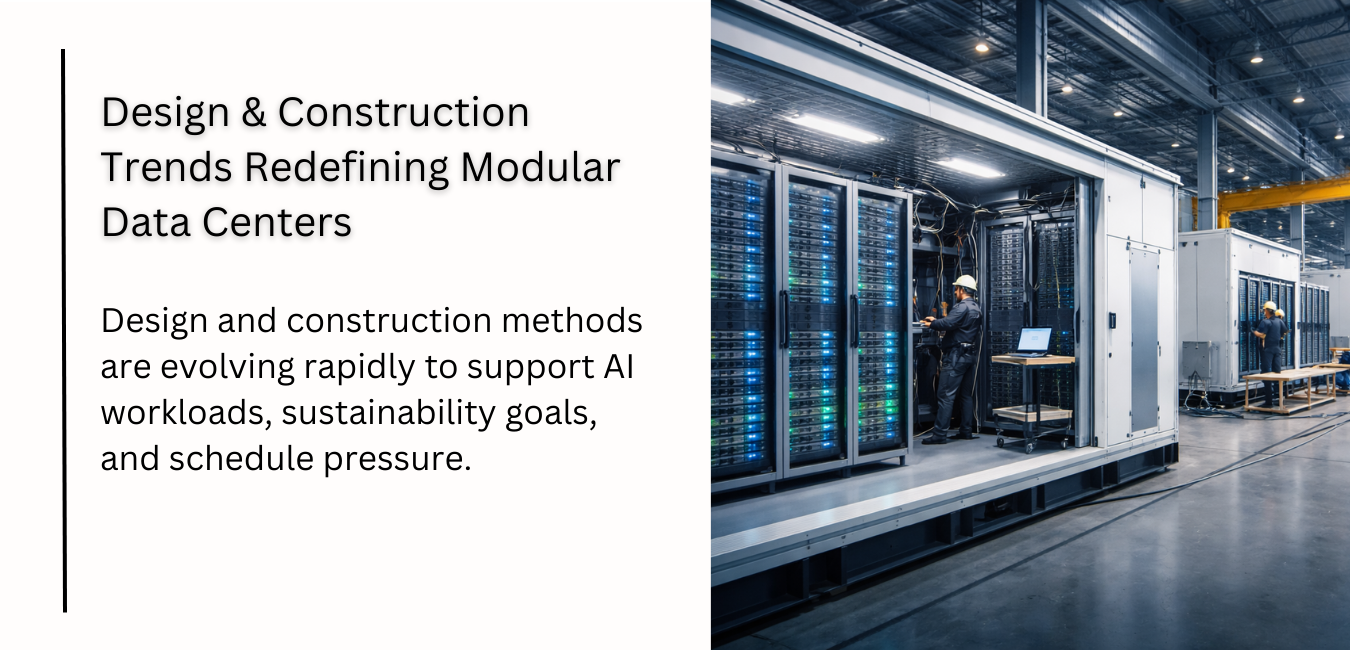
Design and construction methods are evolving rapidly to support AI workloads, sustainability goals, and schedule pressure. The following trends show how modular data center builders are raising the bar on quality, speed, and intelligence.
This section highlights how modular data center builders use digital tools, innovative materials, and new delivery models. These shifts are central to the data center construction trends owners will rely on in 2026.
AI-Driven Planning and Digital Twins
AI-powered planning tools now analyze thousands of site and logistics variables to support efficient modular data center design. As AI is reshaping data center construction, these tools help teams anticipate conflicts, optimize layouts, and compress timelines for mission-critical projects.
Digital twins give owners a living, data-rich model that mirrors the finished facility. By connecting design, fabrication, and operations, they turn modular data center construction into a continuous improvement loop across multiple deployments.
Next-Generation Modular Construction Models
Next-generation models extend the advantages of modular data center construction with flexible combinations of off-site fabrication and on-site assembly. Teams can tailor module sizes, levels of pre-integration, and shipping strategies to regional constraints.
These approaches give owners a scalable, modular data center design framework that can be replicated across sites. The result is consistent performance for mission-critical projects without repeated reinvention.
Smart Materials and Embedded Intelligence
New materials and embedded sensors are turning the building itself into a source of real-time data. Concrete with integrated sensors can track temperature, strain, and moisture, strengthening the feedback loop between modular data center builders and operators.
By pairing advanced coatings, self-healing concrete, and smart composites with modern modular data center construction, facilities gain longer service life and better protection against environmental and operational stress.
Low-Carbon Materials and Regulatory Accountability
Climate policies and investor expectations are reshaping data center construction trends around carbon transparency. Environmental Product Declarations and Global Warming Potential tracking are becoming standard requirements for concrete, steel, and insulation.
With modular data center design, material choices can be standardized and optimized across an entire portfolio. This gives mission-critical projects a clear path to lower embodied carbon and more predictable approval processes.
Digital Safety and Jobsite Intelligence
Wearable sensors, smart helmets, and computer vision tools are redefining safety practices on complex builds. On large, fast-track modular data center construction sites, these tools monitor worker locations, hazards, and compliance in real time.
Digital safety platforms align supervisors, engineers, and modular data center builders around shared dashboards. This leads to safer, more controlled environments that still hit aggressive schedules for mission-critical projects.
Technical & Operational Shifts Driving Performance Gains
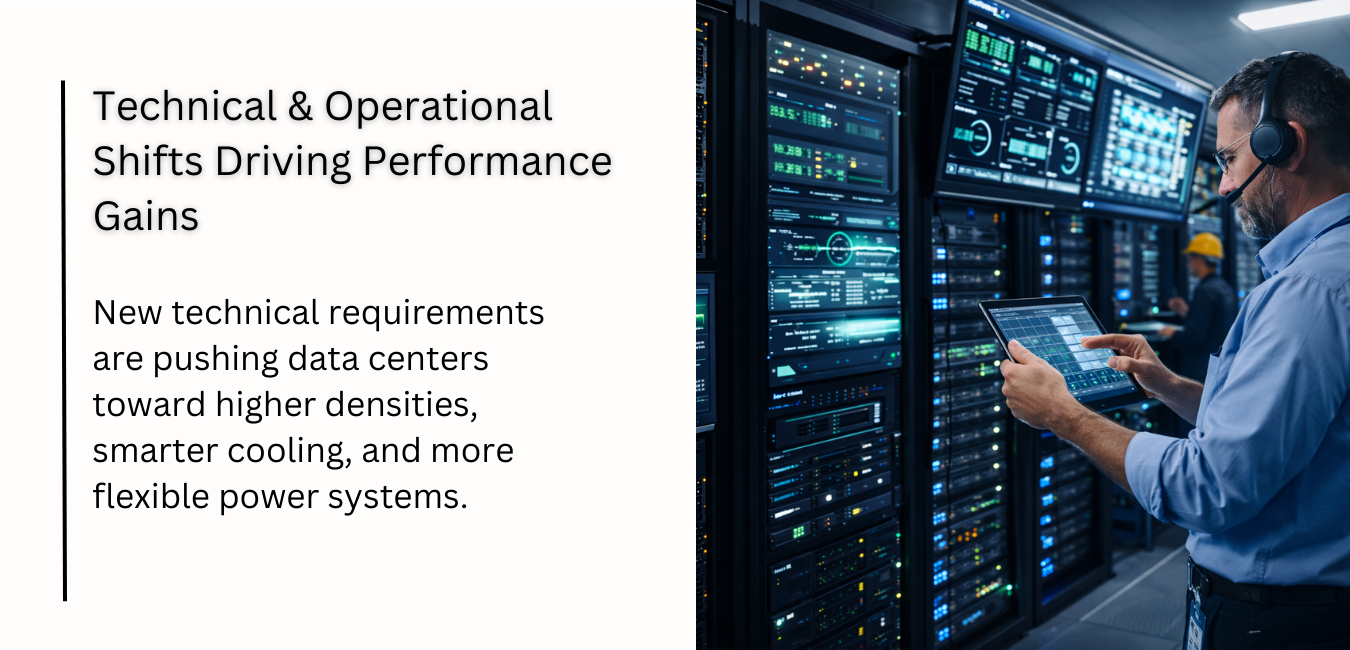
New technical requirements are pushing data centers toward higher densities, smarter cooling, and more flexible power systems. These shifts reward the precision and repeatability that modular data center design provides.
Here, we look at how data center construction trends in cooling, density, and power are reshaping design decisions. Each shift depends on coordinated modular data center construction and intelligent operations.
Liquid Cooling Becomes the Standard
High-density AI racks are driving a pivot to direct-to-chip and immersion liquid cooling. This move affects every aspect of modular data center design, from rack layouts to pipe routing and leak detection strategies.
To support these loads safely, mission-critical projects are rethinking room configurations, containment strategies, and maintenance access. Liquid-focused modular data center construction gives teams a structured path to pilot, standardize, and scale these systems.
Higher-Density Racks and Infrastructure Re-architecture
Rising density targets are reshaping electrical distribution, cable management, and structural coordination. Power paths must be compact, serviceable, and ready for future upgrades within a consistent modular data center design template.
By addressing these needs early, mission-critical projects can avoid piecemeal retrofits. Carefully planned modular data center construction supports higher rack densities without sacrificing uptime or safety.
Intelligent, AI-Managed Cooling Systems
Cooling systems are increasingly managed by AI and IoT sensors that respond instantly to shifting loads. These systems thrive in environments built on repeatable modular data center design, where sensor placement and control sequences can be standardized.
As a result, data center construction trends are favoring layouts that accommodate fine-grained monitoring and control. Over time, mission-critical projects benefit from lower energy costs and greater operational stability.
Phased and Scalable Infrastructure Strategies
Phased infrastructure strategies give owners the ability to start with a well-engineered core, then scale capacity as demand grows. Within a modular data center design, power and cooling backbones are sized and routed to support multiple future buildouts.
This approach lets modular data center builders deliver early capacity quickly while preserving clear expansion paths. It keeps mission-critical projects aligned with budget realities and market timing without locking the design into a single configuration.
Power Modernization for Complex Loads
AI, edge computing, and mixed-use workloads create complex, rapidly shifting power profiles. To respond, data center construction trends include modern UPS topologies, flexible distribution architectures, and advanced monitoring.
Through thoughtful modular data center construction, these elements can be replicated across sites with consistent reliability. Owners of mission-critical projects gain the resilience and flexibility needed for technologies that may not even exist at project kickoff.
Strategic Imperatives Shaping Modular Data Center Projects
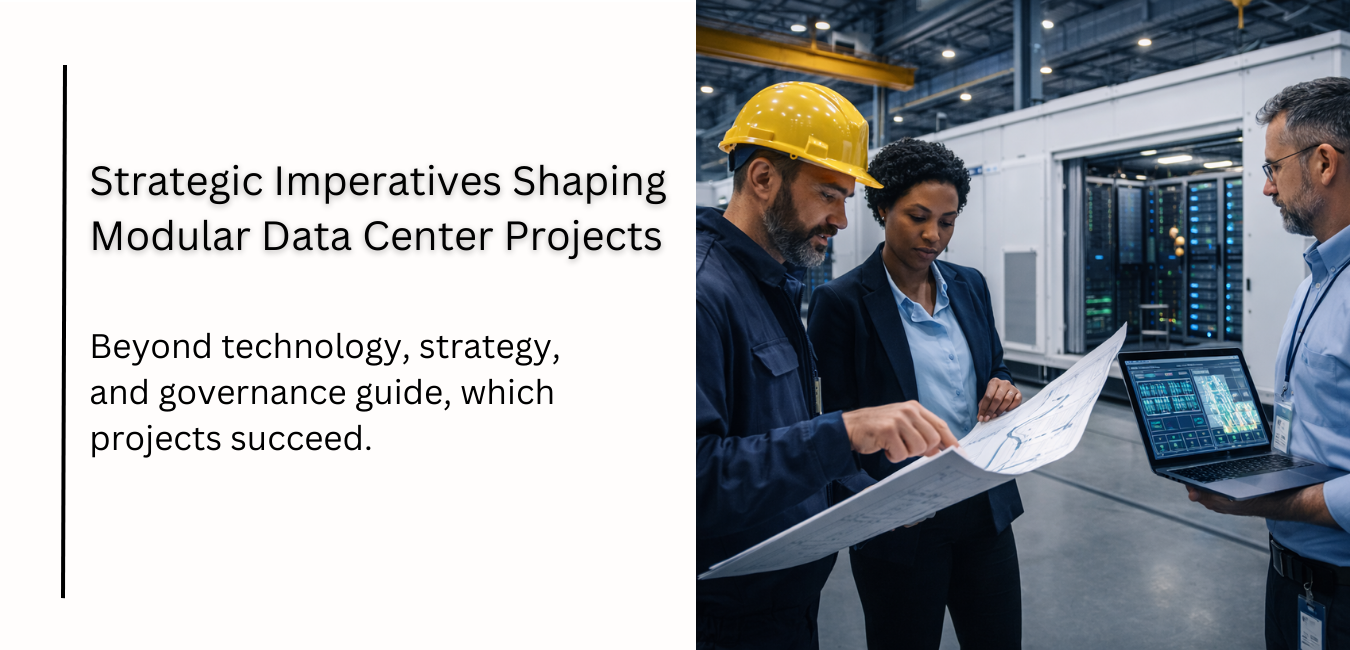
Beyond technology, strategy, and governance guide, which projects succeed. Sustainability, adaptability, and integrated delivery are becoming the core pillars of modular data center design and execution.
This section focuses on why ESG metrics, adaptability, and collaboration are steering data center construction trends. These imperatives shape investment decisions for large mission-critical projects.
Sustainability as a Core Business Driver
Sustainability now influences siting, financing, and long-term operations. Metrics such as PUE, water reuse, and embodied carbon are fundamental to both modular data center design and investor confidence.
Experienced modular data center builders respond with transparent reporting, standardized low-carbon specifications, and better coordination between factory and field. This clarity strengthens the long-term value of mission-critical projects.
Designing for Adaptability and Future Density
Hardware lifecycles are shrinking while project lifespans stretch a decade or more. Owners need modular data center design strategies that anticipate denser hardware, new cooling methods, and evolving regulations.
Flexible layouts, expandable power backbones, and partitionable rooms help mission-critical projects stay viable longer. Adaptable modular data center construction gives operators a way to evolve without repeated major rebuilds.
Integrated Disciplines and Early Collaboration
The most successful projects align architecture, engineering, fabrication, and construction from the earliest concept stages. This aligns with data center construction trends that reward integrated delivery over fragmented contracting.
When modular data center builders are engaged early, design decisions reflect real-world constructability and lifecycle performance. The result is smoother delivery for complex mission-critical projects and fewer surprises in the field.
What These Trends Mean for Owners, Developers, and Long-Term Investors
Investors and developers are viewing data centers through a broader development lens. Consistent, repeatable modular data center design provides a template for long-term, infrastructure-focused portfolios.
This section explains how data center construction trends influence risk, returns, and portfolio strategy. It highlights the value of partnering with experienced modular data center builders.
Modular Thinking as a Long-Term Investment Strategy
Standardized modular data center design frameworks help owners evaluate risk and performance across multiple sites. Predictable modules simplify underwriting and long-term asset planning.
Smaller, distributed facilities, including micro data centers for AI startups, are gaining traction in dense urban areas and near innovation hubs. Lessons from mission-critical projects help developers think about resiliency, power, and connectivity as central value drivers.
Choosing Experienced Modular Data Center Builders
Builder selection has a direct impact on schedule, cost, and operating outcomes. Owners increasingly seek modular data center builders with proven experience on complex mission-critical projects and multi-site programs.
These partners understand how modular data center construction interacts with permitting, grid constraints, and future retrofit needs. Their track record reduces risk and creates a foundation for scalable, repeatable growth.
How Element Homes Applies Modular Data Center Thinking to the Future of Residential Building
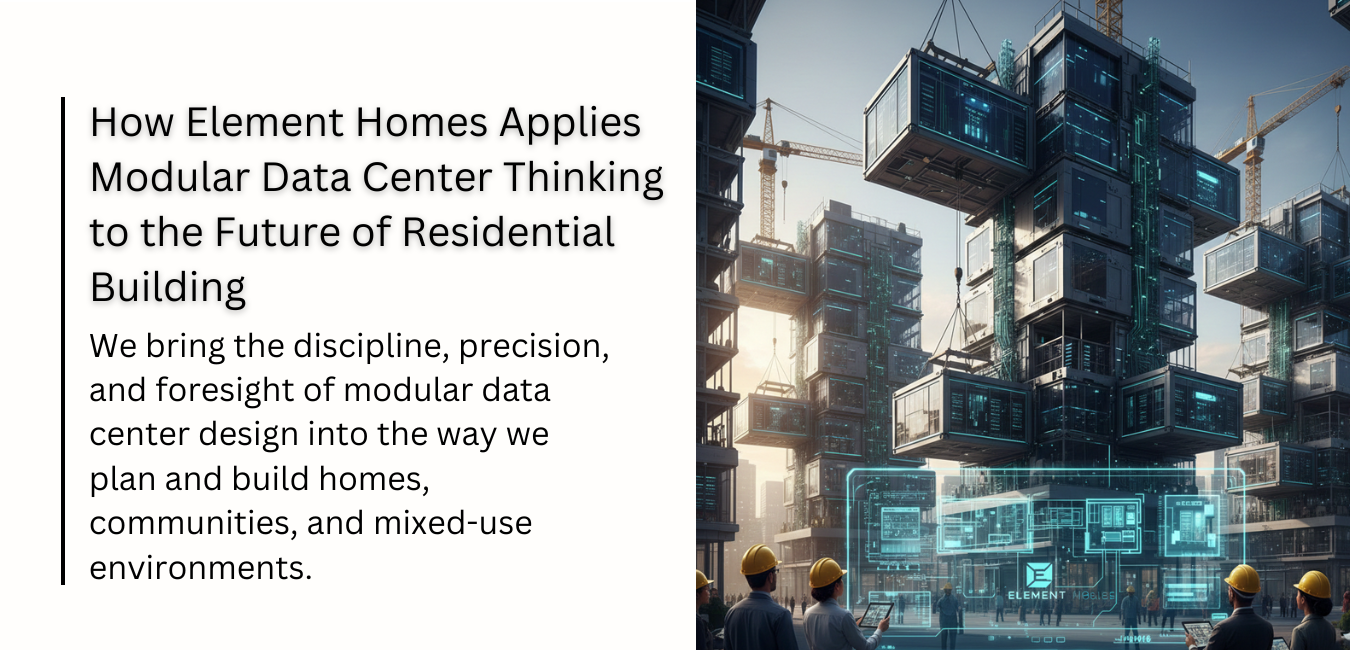
We bring the discipline, precision, and foresight of modular data center design into the way we plan and build homes, communities, and mixed-use environments. Our team treats each project as part of a connected system, focused on long-term performance, resilience, and digital readiness.
Here, we explain how our design-build structure, technical mindset, and focus on scalability guide our work at Element Homes. We draw on data center construction trends and lessons from mission-critical projects to shape residential and community development.
From Turnkey Homes to Mission-Critical Residential Infrastructure
We manage architecture, permitting, land development, and construction within one coordinated team, so our clients work with a single, accountable partner. That unified approach reflects the clarity and control that owners expect on mission-critical projects.
By applying concepts proven in modular data center construction, we approach residential developments as integrated infrastructure rather than isolated buildings. Our focus stays on power resilience, connectivity, and long-term performance from the earliest planning stages.
Designing Homes and Communities for Intelligence, Resilience, and Longevity
We prioritize building science, energy systems, and embedded digital infrastructure that can evolve as lifestyles and technology change. The structured thinking behind modular data center design guides how we plan layouts for electrical systems, networking, and thermal comfort.
Our approach aligns with broader data center construction trends that favor durability, adaptability, and performance under stress. Residents benefit from the same reliability and foresight that define successful mission-critical projects.
Why Modular and Integrated Delivery Is Central to Our Vision
We organize our teams around integrated delivery so design, engineering, and construction stay aligned from concept to completion. The collaborative practices used by leading modular data center builders influence how we coordinate decisions, schedules, and quality.
By adapting principles from modular data center construction, we support predictable timelines, cost clarity, and consistent execution across our communities. Our clients receive homes and neighborhoods shaped with infrastructure-level rigor and attention.
Conclusion
The leading data center construction trends of 2026 point toward a clear direction: standardized, intelligent, and low-carbon facilities built through modular data center design and modular data center construction. AI planning tools, liquid cooling, modern power architectures, and integrated delivery are redefining expectations for mission-critical projects worldwide.
Owners, developers, and investors who partner with experienced modular data center builders will be best positioned to capture long-term value from this shift. The same thinking is beginning to transform residential and mixed-use work, where digital infrastructure and resilience now carry central importance.
Element Homes embraces this modular, future-ready mindset in every community and home we create. Connect with our team to explore how infrastructure-grade thinking can shape your next residential or mixed-use project and position it for long-term success.

Related POsts
Longevity Home Design: Key Features for a Healthier Luxury Custom Home
Explore longevity home design ideas for a healthier luxury custom home, from cleaner air and better lighting to wellness spaces and durable materials.
Read moreBuilding a Luxury Custom Home in Atherton: Costs, Permits, Timelines & Design
Planning a luxury custom home in Atherton? Learn about costs, permits, timelines, tree rules, design choices, and what to review before construction.
Read more