

House Addition vs ADU vs Second Unit: Which Adds More Value in California?


.png)
California homeowners already own something powerful: land in a market where usable space stays in demand. The question is how to use it wisely. A house addition can expand the main residence, an ADU can create rental potential, and a second unit can open a wider development path.
The best choice depends on your goal. Do you need bedrooms, a private suite for parents, a monthly income, or a density strategy? Element Homes works with California owners on custom home planning, ADUs, additions, and home construction, so this guide stays practical.
How Each Option Creates Value in California
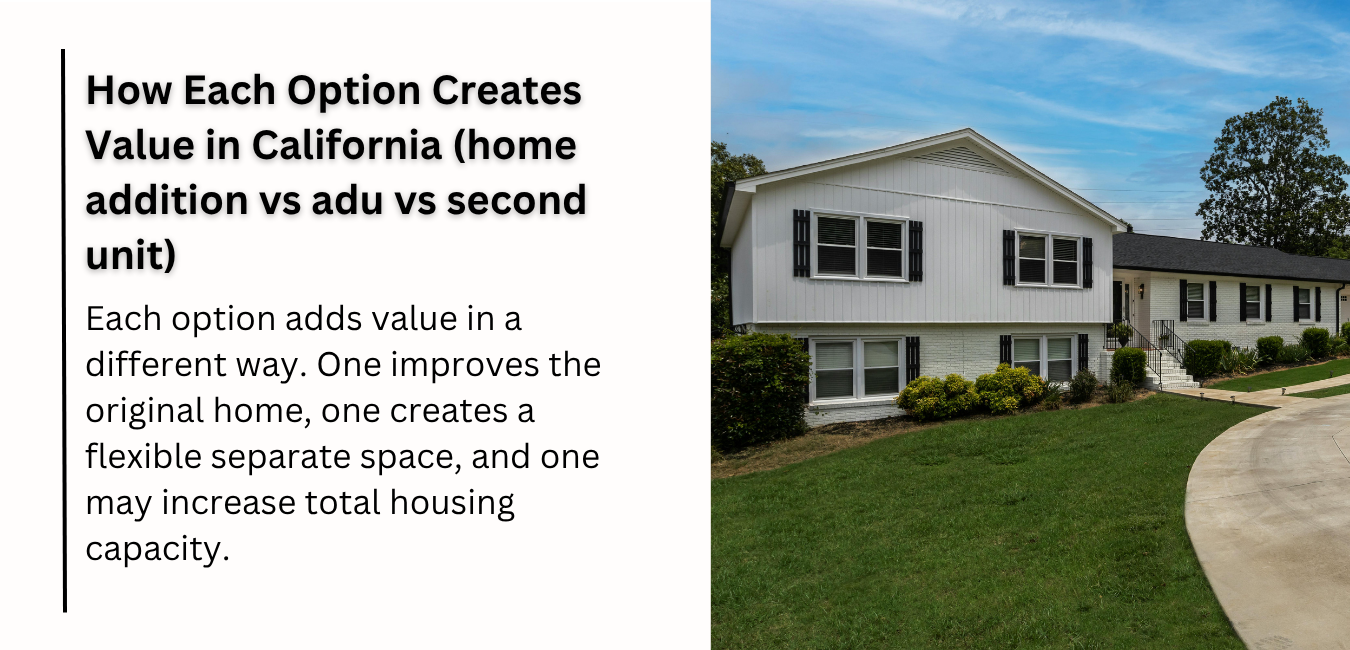
Each option adds value in a different way. One improves the original home, one creates a flexible separate space, and one may increase total housing capacity.
A connected addition improves the main home
A house addition is often the most natural choice when your family needs connected space. It can add a bedroom, bathroom, family room, larger kitchen, office, or primary suite. When the design matches the roofline, exterior materials, interior flow, and natural light, the new area feels intentional.
This option suits owners who plan to stay for years. A thoughtful project can reduce crowding and support custom home features like a better gathering area or private guest room.
An ADU creates flexibility and income potential
An ADU can be detached, attached, converted from a garage, or created inside part of the home. With the right ADU service, it can become a rental unit, guest house, in-law suite, studio, or quiet work area.
A skilled ADU contractor studies setbacks, access, privacy, utilities, drainage, parking, and city rules before design begins. Since the unit can function separately, it may support renters, aging parents, or adult children living nearby.
A second unit can unlock density
A second unit, often connected with SB 9 planning, may create stronger long-term equity on certain lots. Instead of adding accessory space, the owner may be adding another primary dwelling or exploring a lot split.
This route is usually the most complex, often involving infrastructure, access, fees, legal review, and careful home construction budgeting.
House Addition, ADU, and Second Unit: A Practical Comparison
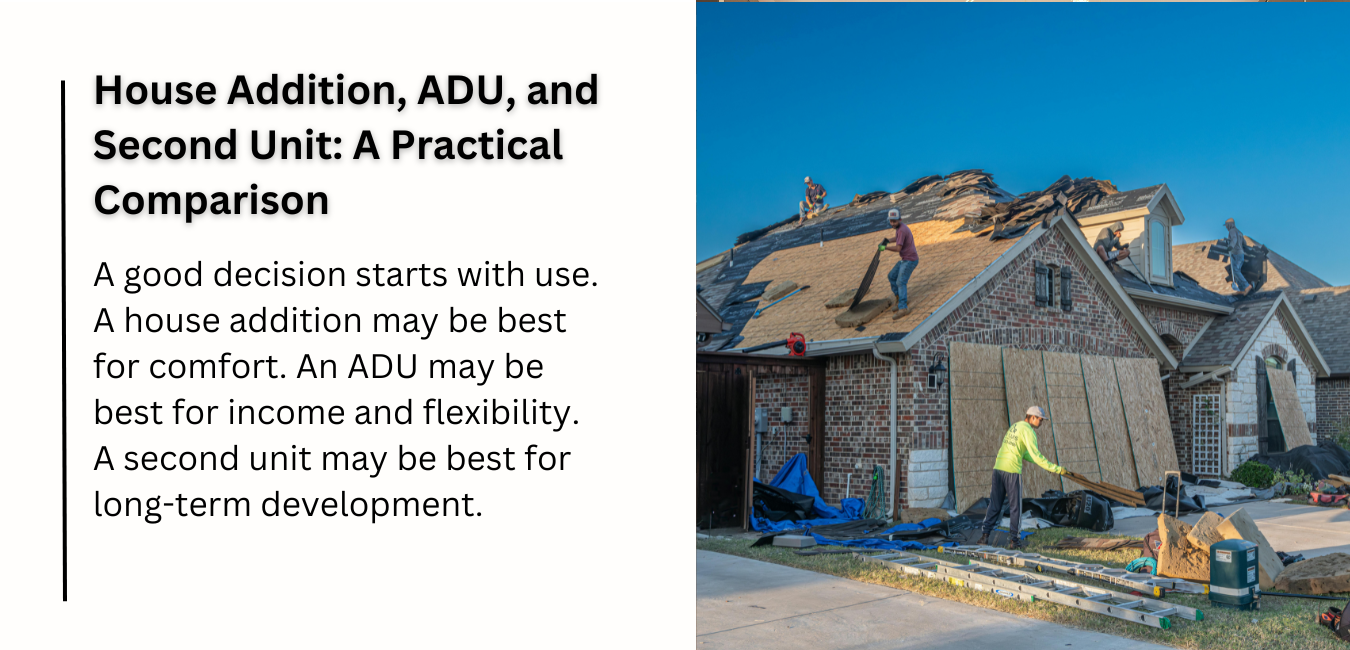
A good decision starts with use. A house addition may be best for comfort. An ADU may be best for income and flexibility. A second unit may be best for long-term development.
Best fit by homeowner's goal
Use this quick guide:
- Choose a house addition if you need connected bedrooms, bathrooms, or shared living space.
- Choose an ADU if rental income, guest space, or multi-generational living is the priority.
- Choose a second unit if your lot may qualify for SB 9 and you are ready for deeper planning.
- Compare advice from home addition contractors, an ADU contractor, and your local planning office.
ROI, resale value, and monthly cash flow
A house addition can raise resale appeal because the main home becomes larger and easier to live in. The return is tied to appraisal value, buyer demand, and how well the space solves a real layout problem.
The key to an ADU service is the impact it has on the financial situation, as the completed space can generate rent. It will be used to pay your mortgage or maintenance. A second unit may offer greater equity potential, but can have higher planning costs.
Cost, disruption, and build complexity
An addition often touches the existing structure. That can mean foundation work, roof tie-ins, framing changes, and construction activity near the main living area. This is why experienced home addition contractors are important.
An ADU, particularly a separate ADU, could have less impact on the primary home. Sometimes a garage conversion will go quicker than new construction. Future property use, utilities, and access may be impacted by a second unit.
When an Addition Is the Smarter Choice
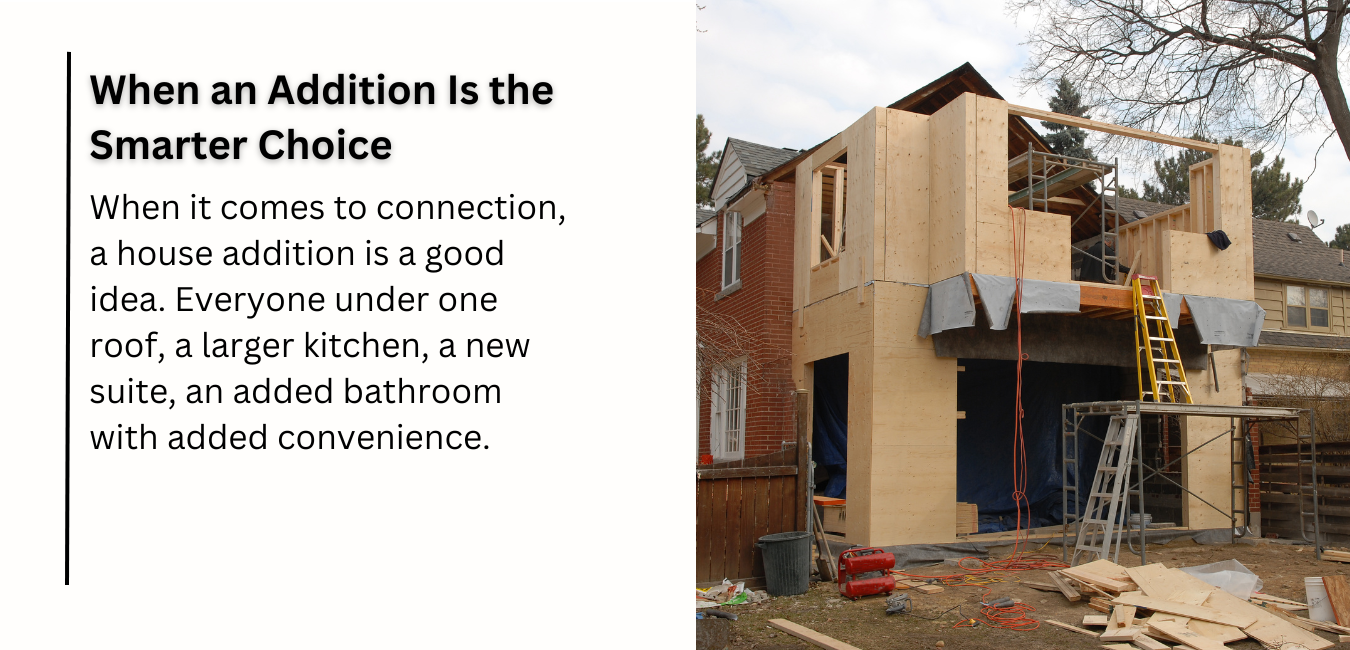
When it comes to connection, a house addition is a good idea. Everyone under one roof, a larger kitchen, a new suite, an added bathroom with added convenience.
You need space that your family will use every day
A house addition works well for daily-use rooms, such as a primary suite, children’s bedrooms, a larger dining area, a family room, or a downstairs guest room. These rooms improve how the original home lives, which can matter as much as the resale value.
Good home builders look at the whole property, including traffic flow, light, ceiling height, exterior balance, and how new rooms affect old ones.
You want to protect the outdoor space
Some families want to keep the backyard open for a pool, garden, play area, or entertaining. A detached ADU may reduce that area. A house addition can sometimes preserve the yard by building upward or using a side yard.
You want one coordinated build team
There are a number of reasons for the variance in budgets, as each of the homes that are already built is unique. Cost is influenced by foundation requirements, structure changes, plumbing lines, finishes, and permits. Ask the home addition contractors how they manage design, engineering, permits, estimates, schedules, and finish selection processes when dealing with customers.
Element Homes follows a design/build methodology that may assist in maintaining a close link between planning and construction from the initial conversation. This is important in residential home construction projects where minor changes can impact the budget and schedule. Professional home addition contractors are also likely to be able to identify structural surprises early.
When an ADU or Second Unit May Create Greater Long-Term Value
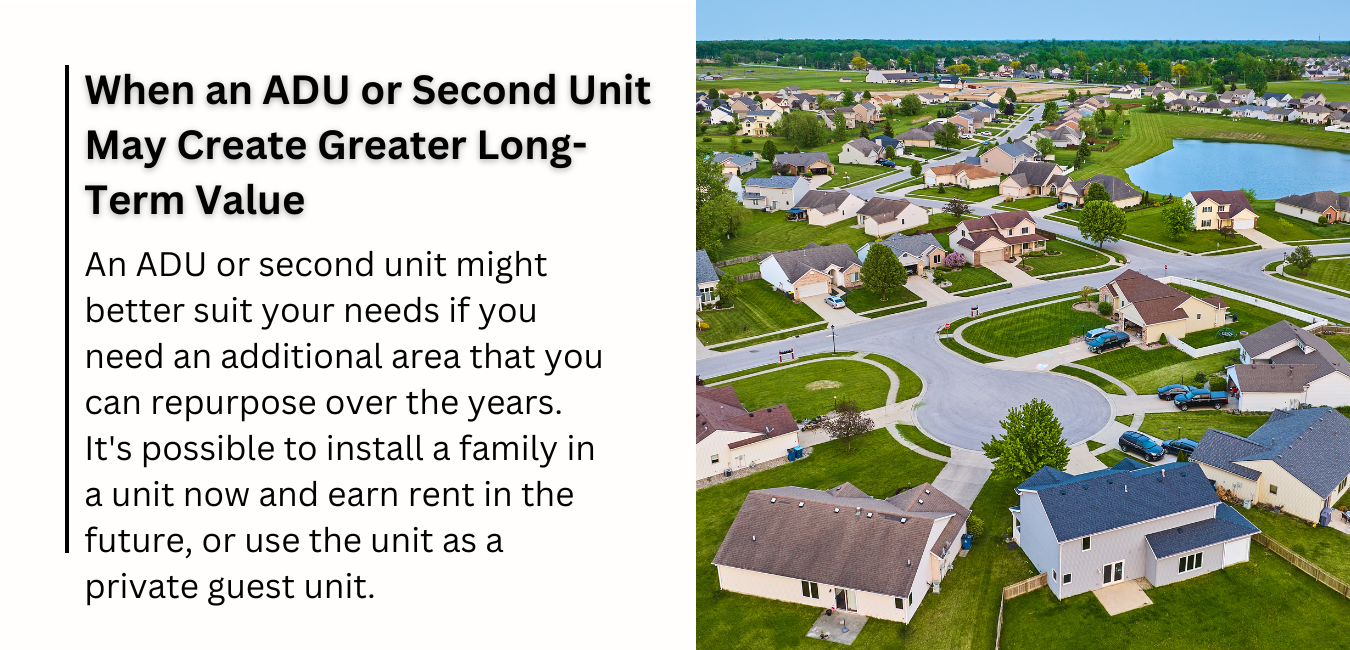
An ADU or second unit might better suit your needs if you need an additional area that you can repurpose over the years. It's possible to install a family in a unit now and earn rent in the future, or use the unit as a private guest unit.
ADUs offer private, flexible living
A thoughtfully designed ADU service ought to deliver comfort in a restricted area. Factors such as privacy, sound control, storage, natural light, long-lasting finishes, and functional kitchens all play a role.
A skilled ADU contractor can assist with determining if a detached unit, attached unit, garage conversion, or junior ADU is suitable for the site. Accessibility, cost, urban regulations, and owner objectives are all factors in the best layout.
Rental income can change the decision
Rental income is the reason many owners compare these two paths. One improves the home’s size. The other may create a separate income stream. If the local rental market is strong, an ADU can help offset project costs over time.
A qualified ADU contractor can plan around comfort and maintenance, which can support stronger tenant interest. A complete ADU service should also consider utilities, parking, outdoor access, and privacy.
SB 9 may fit larger or high-demand lots
A second unit can be appealing on larger lots or in areas where there is a significant market demand for more housing. “Depending on state rules and local standards, SB 9 might allow some owners to build units or split a lot.
This is where seasoned home builders can be valuable. They can identify constraints early, such as slope, easements, fire access, utility capacity, and drainage.
How to Choose the Right Path for Your California Property
The project that fits your property, budget, lifestyle, and time frame. Begin with purpose. Then learn the rules. Then check out real designs and costs.
Start with a clear checklist
Before spending heavily on drawings, review these basics:
- Confirm local rules for ADUs, additions, and SB 9 projects.
- Decide whether personal space or rental income matters most.
- Review yard area, access, utilities, privacy, parking, and drainage.
- Compare a house addition with an ADU service before choosing.
- Ask home addition contractors how they price unknown structural conditions.
Choose an experience that matches the project
Not every builder is right for every path. ADUs require small-space planning. Additions need structural sensitivity and home construction planning. Second units may require broader development thinking. For a custom home or major remodel, the team should understand both design and construction.
Many California owners are looking for custom home builders who can assist them from the earliest feasibility to the final walkthrough. A good design-build team should be able to properly explain tradeoffs, provide honest budget recommendations, and keep the process structured.
House Addition vs ADU vs Second Unit: Cost and Value Comparison
Conclusion
The best choice depends on what you want the property to do. A house addition is ideal for a connected family space and everyday comfort. An ADU is often best for flexibility, guest housing, and rental income. A second unit may offer strong long-term equity when the lot, zoning, and budget align.
For many California homeowners, an ADU wins on financial flexibility, while an addition wins on lifestyle.
If you are planning a house addition, ADU service, second unit, custom home, or full home construction project in California, contact Element Homes to talk through your property, goals, and next step.
Frequently Asked Questions
Does a house addition add value in California?
Yup. Adding a house addition can increase value when it improves the layout, size, and comfort of the primary home. The best projects fulfil a definite need, such as a bedroom, bathroom, larger kitchen, or family area.
Is an ADU better for ROI?
An ADU may offer a stronger long-term ROI when it can be rented legally and managed well. An addition improves the main home, while an ADU can add income potential. The better choice depends on a lot of conditions, including budget, city rules, and demand.
Are second units and ADUs the same?
“No.” An ADU is an auxiliary dwelling attached to a primary residence. SB 9 allows a second unit to be classified as either a separate principal unit or as a lot split scheme. Rules, costs, financing, and resale opportunities differ.
Which option is easiest to build?
The easiest path depends on the property. A detached ADU or garage conversion may disturb the main home less. A second unit is often the most complex because it can involve wider site and legal questions.

Related POsts
Longevity Home Design: Key Features for a Healthier Luxury Custom Home
Explore longevity home design ideas for a healthier luxury custom home, from cleaner air and better lighting to wellness spaces and durable materials.
Read moreBuilding a Luxury Custom Home in Atherton: Costs, Permits, Timelines & Design
Planning a luxury custom home in Atherton? Learn about costs, permits, timelines, tree rules, design choices, and what to review before construction.
Read more